Before The White Wedding
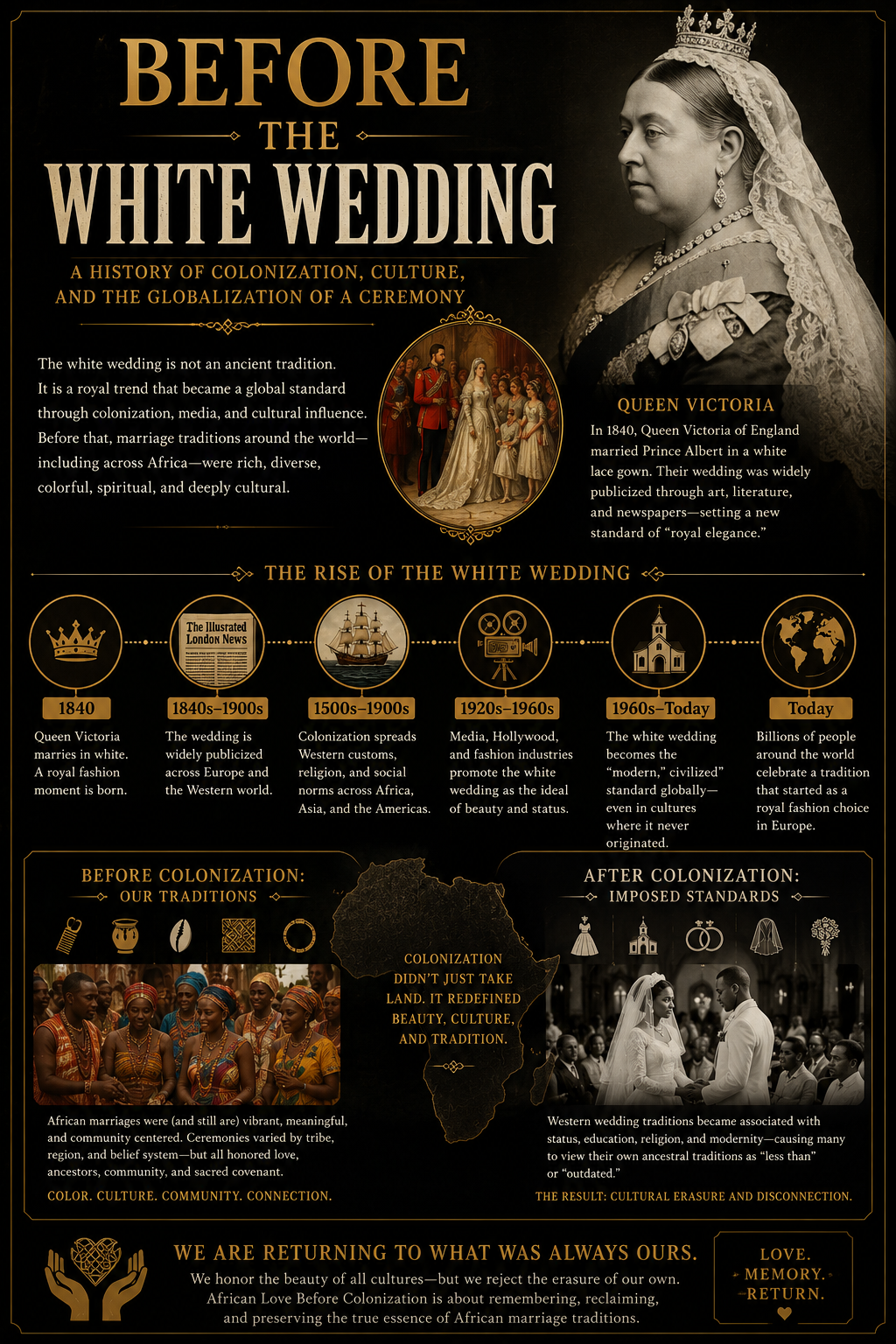
Across much of the world today, marriage has become visually associated with the Western “white wedding” (white dresses, tuxedos, bridal parties, churches, and traditions rooted in European influence). For many people, this version of marriage has become so normalized that few stop to ask where these customs originated or what existed before colonization reshaped cultures across the globe.
Ironically, the globally recognized white wedding tradition became popular after Queen Victoria wore white during her 1840 wedding ceremony, influencing bridal customs throughout Europe and eventually across colonized societies around the world.
Yet long before colonial influence spread across Africa, African societies already possessed rich, deeply structured marriage traditions that had existed for centuries. These ceremonies were not simply celebrations of romance, they were sacred systems rooted in family, ancestry, spirituality, diplomacy, identity, responsibility, and community.
African Love Before Colonization exists to document and preserve these traditions.
For descendants of enslaved Africans throughout the diaspora, marriage carries another layer of historical significance. During slavery in the Americas, enslaved Africans were often denied the legal right to marry. Husbands, wives, and children could be separated through sale at any moment. Families were intentionally destabilized, and African cultural systems surrounding marriage and kinship were systematically disrupted.
And yet, despite unimaginable conditions, African people still found ways to create unions, honor partnerships, build families, preserve fragments of ancestral customs, and maintain community structures. That resilience matters. For many African Americans today, there remains a painful historical gap: a disconnect from the marriage traditions, ceremonies, philosophies, languages, and communal practices that once shaped our ancestors’ understanding of love and partnership before colonization and forced displacement. African Love Before Colonization is our attempt to help bridge that gap.
As African Americans traveling throughout the continent to respectfully participate in and document traditional ceremonies, we recognize that this journey is bigger than us. It is about preservation, remembrance, and honoring systems of love that survived despite centuries of erasure.
More Than a Wedding
In many traditional African societies, marriage represents far more than a union between two individuals.
It is often viewed as:
the joining of families
the continuation of ancestral lineage
a communal responsibility
a spiritual covenant
an economic partnership
and a public commitment witnessed by an entire community
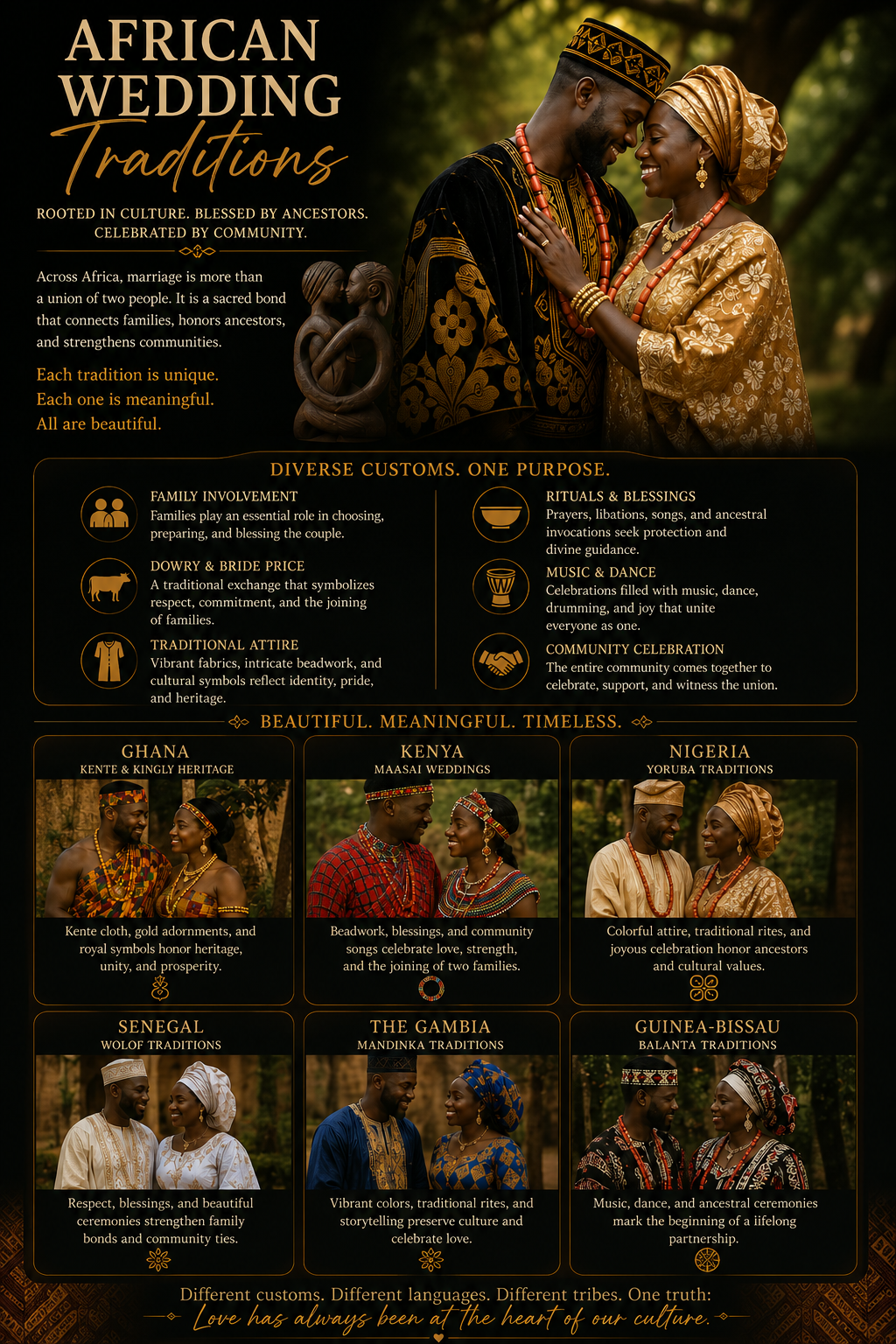
Across Africa, ceremonies may include:
family negotiations
symbolic gifts and dowries
ancestral blessings
traditional attire tied to lineage and identity
ritual foods and drinks
music and drumming
communal dancing
elder involvement
oral teachings passed down through generations
Every ethnic group, region, and nation carries its own customs, symbolism, and philosophies surrounding marriage. No two ceremonies are exactly alike.
Unlike many modern weddings that focus heavily on aesthetics or performance, traditional African marriage systems often center collective participation and long-term communal support for the couple’s future. These ceremonies are living cultural archives.
Why This Documentation Matters
Around the world, globalization has increasingly standardized what weddings should look like. Social media, colonial history, missionary influence, and modern media have contributed to a growing mixture of marriage traditions.
As younger generations migrate to cities, adopt Western customs, or move away from ancestral practices, some traditional ceremonies risk being forgotten, diluted, or abandoned altogether. Elders who carry oral histories and ceremonial knowledge will not be here forever.
That reality makes preservation urgent.
African Love Before Colonization exists to respectfully document these traditions while they are still living, practiced, evolving system, not museum artifacts or rewritten historical interpretations.
This project is not about romanticizing the past. It is not about claiming one culture is superior to another. It is about visibility, cultural preservation, and honoring the beauty and complexity of African societies on their own terms.
A Living Journey Across Africa
African Love Before Colonization is an ongoing journey throughout the African continent to experience, document, and share traditional marriage ceremonies directly within the communities that continue to practice them today.
Each ceremony teaches us something different about:
love
partnership
identity
responsibility
family
spirituality
and cultural continuity
From negotiations and attire to music, rituals, food, language, and symbolism, every experience becomes part of a larger archive preserving the diversity of African marital traditions for future generations.
These ceremonies are not relics of the past. They are living systems of culture, memory, resilience, and love that continue to thrive across Africa today.
And through this journey, we hope to help reconnect people throughout the diaspora to traditions many never had the opportunity to inherit.